The conducted audit showed that there were no irregularities in the implementation of the project.
The publication A Future through the Past presents discussions from the XVII RECOM Forum, showing that existing transitional justice mechanisms have not led to social change.
The data presented in the exhibition “Massacres in Kosovo 1998–1999” in several instances provide an inaccurate representation of crimes. This is not a matter of interpretation, but of a fundamental lack of knowledge of international humanitarian law, court-established facts, and the proper reading of data from the HLC and HLCK database.
The Humanitarian Law Center (HLC) and the Humanitarian Law Center Kosovo (HLC Kosovo) have collected data and published a nominal list of victims who lost their lives during the NATO bombing of the Federal Republic of Yugoslavia. According to this data, a total of 755 people were killed in NATO attacks: 450 civilians and 305 members of armed forces.
The Humanitarian Law Center strongly condemns the statement made by the Vice-President of the Assembly of the Autonomous Province of Vojvodina, Nemanja Zavišić, claiming that “all Croats are Ustaše.” The statement, which Zavišić shared on his Facebook profile, constitutes hate speech and a violation of the Law on the Prohibition of Discrimination, incites hostility, and stigmatizes an entire community.
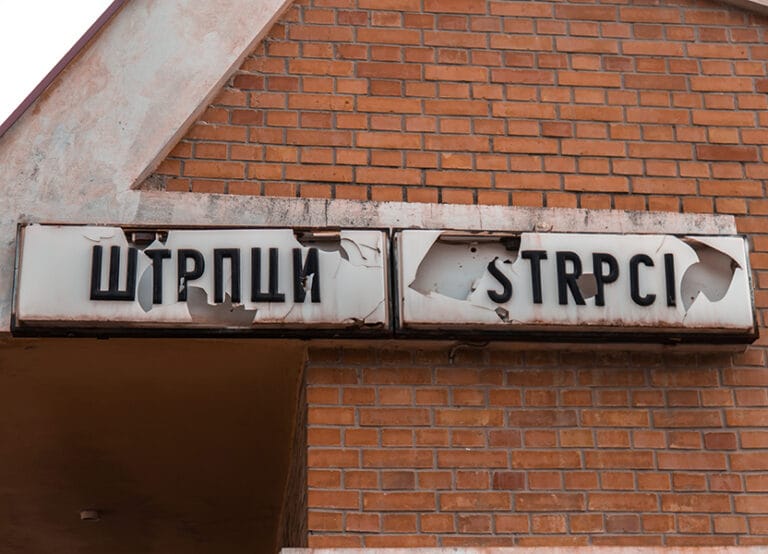
Today marks thirty-three years since the abduction of passengers at the Štrpci railway station, when members of the Army of Republika Srpska (VRS) removed 20 passengers from train no. 671, operating on the Belgrade–Bar line, and subsequently killed them. For more than three decades, the families of the victims have been waiting for justice before the judiciary of the Republic of Serbia and continue to search for the mortal remains of their loved ones.
On 26 February 2026, the War Crimes Department of the Higher Court in Belgrade rendered a first-instance judgment finding Đeljoš Krasnići (Gjelosh Krasniqi), a former member of the Kosovo Liberation Army, guilty of the murder of three and the wounding of one civilian of Serbian nationality on 19 June 1999 in the village of Belo Polje (Bellopojë) near Peć. The Court found Krasnići guilty of the criminal offence of a war crime against the civilian population and imposed a sentence of 15 years’ imprisonment. The proceedings were conducted in absentia.
A society that turns sites of suffering into tourist attractions without clear acknowledgment of the crimes committed there accepts the suppression and erasure of violence against women.
Kosovo’s Special Prosecution has, on the eve of the 27th anniversary of the killing of at least 42 Albanians – including one woman and one child – in the village of Račak near Štimlje (Uroševac), filed an indictment against 21 members of the 243rd Mechanized Brigade of the Yugoslav Army and the Serbian Ministry of Interior (MUP). The accused will be tried in absentia before the Basic Court in Pristina.
Author: Nataša Kandić
The judgment and the prison sentence imposed aginst Jovan Radan will discourage victims of rape from reporting war crimes, and from appearing in the courtroom face to face with the defendant, for whose family situation the judges have shown more understanding than for the trauma and violated dignity of the rape victim.
On 20 November 2025, the War Crimes Department of the Higher Court in Belgrade delivered a first-instance judgment acquitting Milenko Karlica and Željko Novaković of charges of war crimes against the civilian population committed in the hamlets of Alići and Ekići in the village of Maslovare in June 1992.
HLC considers that the sentences of five to ten years in prison are not just, given the gravity of the crime and the responsibility of the defendants, who committed one of the gravest war crimes against Bosniak civilians, citizens of the Federal Republic of Yugoslavia.
| MonMonday | TueTuesday | WedWednesday | ThuThursday | FriFriday | SatSaturday | SunSunday |
|---|---|---|---|---|---|---|
30 | 31 2 | 1 1 | 2 | 3 | 4 1 | 5 2 |
6 | 7 | 8 | 9 | 10 | 11 | 12 |
13 | 14 | 15 | 16 1 | 17 1 | 18 | 19 |
20 1 | 21 | 22 1 | 23 | 24 | 25 | 26 |
27 1 | 28 | 29 | 30 | 1 1 | 2 | 3 |
Human rights activists are increasingly using social media to promote justice and reconciliation...
Koristimo kolačiće radi prižanja boljeg korisničkog iskustva i funkcionisanja ove prezentacije u skladu sa Politikom privatnosti i Uslovima korišćenja i Politikom kolačića.
Websites store cookies to enhance functionality and personalise your experience. You can manage your preferences, but blocking some cookies may impact site performance and services.
Essential cookies enable basic functions and are necessary for the proper function of the website.
You can find more information in our Cookie Policy and Terms of Use and Privacy Policy.